Clinical Psychologist Dubai

With 20 years of experience as a clinical psychologist, I relocated to the United Arab Emirates in 2019. I offer therapy for adults struggling with depressionanxiety, painful experiences, negative thoughts, uncomfortable emotional states, unhealthy behaviours, and complex relationship patterns. Practicing as a clinical psychologist in Dubai, a multi-cultural metropolis, affirms the universality of humankind – similar mental health issues occur across all nationalities. 


What do you see?

The image at the top of the page can be viewed as a rabbit or a duck and illustrates that what we apprehend is not always entirely accurate - alternate perspectives exist.

The rabbit/duck image illustrates that we do not always fully grasp the various factors underlying our mental health. For example, one might seek anxiety treatment with a clinical psychologist in Dubai following relationship difficulties. After examining the symptoms surrounding anxiety, a psychodynamic therapist will probe beneath the surface of the symptoms to identify less visible factors contributing to the distressed state of mental health. For example, the anxiety may also point to an insecurity regarding personal value, issues with trust, fear of abandonment, or a preference for control.

Using the above example, therapy becomes less about anxiety treatment and more about improving self-worth, trust, managing abandonment fears, and lessening the need for control. Symptoms should not always be taken at face value. They often communicate less visible aspects of ourselves. Living as an expat is a time limited experience and offers a moment to stop and examine our mental health with a clinical psychologist in the U.A.E.


We all experience psychological distress which can at times become impossible to deal with on our own. Psychodynamic therapy aims to understand the origin of symptoms and patterns, why they continue to operate, and to assist in affecting change. Starting therapy requires the courage to admit that something is not working in our lives.


My approach

My psychological approach is psychodynamic and focuses on the unconscious, internalized images of early relationships, thinking-feeling styles, trauma, relational patterns, and defences.

Freud is well-known as the founder of psychodynamic theory in the late 19th and early 20th centuries. His work was advanced by many notable figures, including Bowlby (attachment), Sullivan (interpersonal), Kernberg (object relations) and Fonagy (mentalization).

My approach combines the development of deeper understanding of yourself with mental strategies to improve distressing symptoms and foster lasting psychological change. 


Diagnosis

Mainstream clinical psychology emphasizes diagnosis as the first port of call. Although diagnosis risks boxing individuality, it also helps to identify the precise nature of a mental health issue. In turn, this influences the focus of therapy. For example, a diagnosis of depression will require a treatment focus that differs from anxiety treatment.

Diagnosis is only one aspect of therapy. A psychodynamically trained clinical psychologist will pay attention to various factors underlying a diagnosis. These include attachment style, cognitive and affective patterns, personality features, interpersonal themes, defenses, and unconscious factors.  

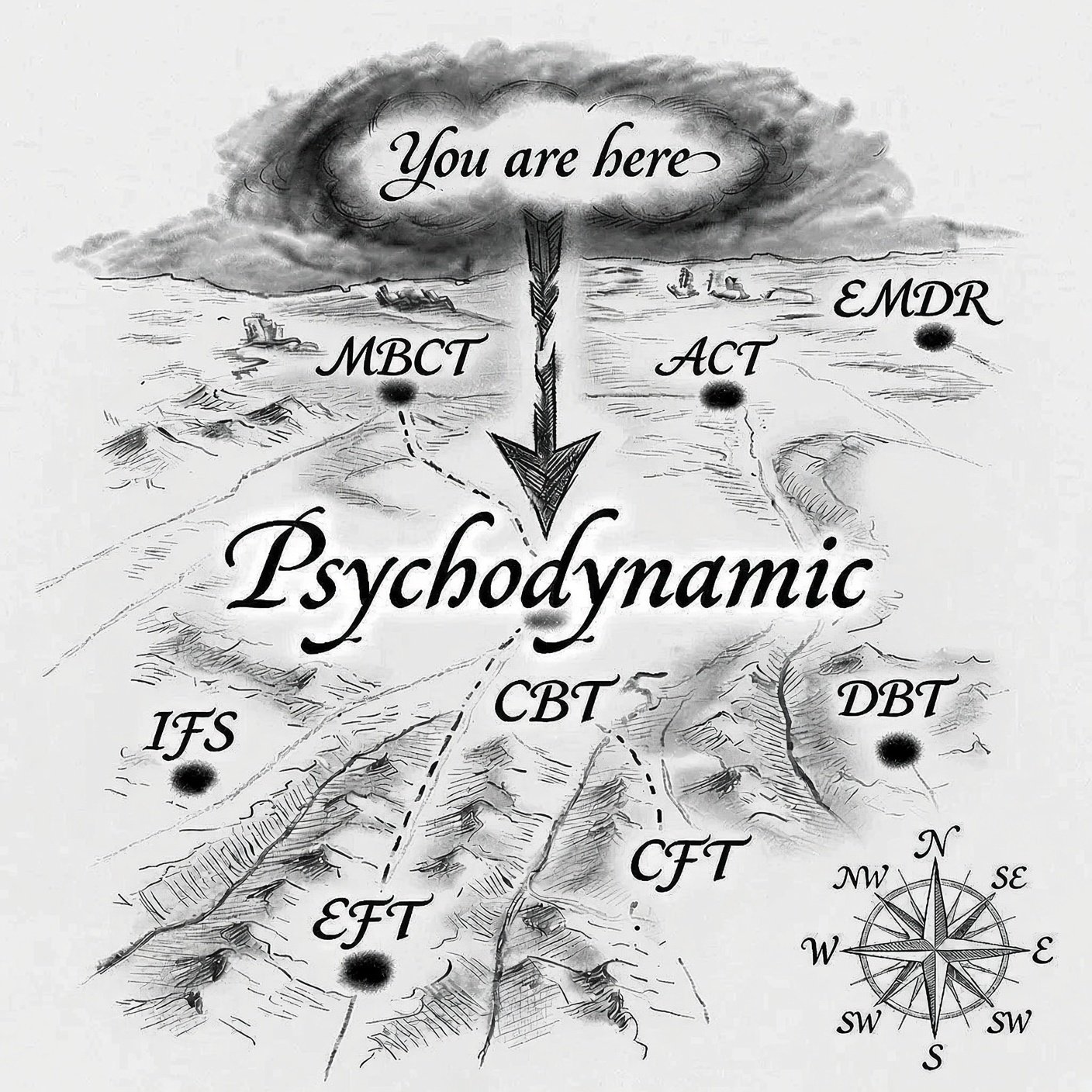
Diagnosis can be understood as locating an area on a map. The exploration of the actual territory is similar to therapy, and the clinical psychologist can be viewed as a guide.


Defences

Defences are an integral part of our psychology and we will find them occurring at home, in Dubai, and on holiday. They develop unconsciously during our childhood to protect us from painful experiences, thoughts and feelings. One of the problems with defences is that they become outdated as we move into adulthood and risk compromising our mental health. For example, let us imagine the denial of emotion being used to manage hurtful childhood experiences. This works well until adulthood is reached and romantic relationships are entered into - the continued denial of emotion will negatively impact on the quality of a relationship. Adulthood requires the identification, examination, and reshaping of our particular defence strategies if we hope to have positive relations with both ourselves and others. Treatment by a clinical psychologist will facilitate this process.

Some common defences are listed below.


Isolation of affect

Isolation of affect involves detaching from the emotional component of distressing experiences while retaining clear cognitive recall of the events. For example, an individual may recount a painful argument or traumatic incident in detail without experiencing the associated anger, sadness, or anxiety. The emotional charge is separated from the memory and typically results in unemotional or detached descriptions of distressing experiences. Although this defence can provide temporary relief by reducing immediate overwhelm, the blocked emotions may later emerge in delayed or displaced reactions.


Idealizing Others

Attributing exaggerated positive qualities to real or imagined figures strengthens self-esteem through association. For example, perceiving a mentor as flawless or seeking a perfect partner enables the unconscious borrowing of specialness, competence or worth from the idealized figure and temporarily alleviates feelings of inadequacy. Although an idealized figure’s shortcomings may be intellectually recognized, they are often downplayed to preserve the fantasy. The surfacing of undeniable human flaws in the idealized other leads to feelings of sharp disappointment and a reduction in self-esteem. 


Self-Devaluation

Feelings of inadequacy are defensively managed by devaluing the self-image. Attributing exaggerated negative qualities to the self paradoxically protects against future personal disappointments or external criticism by lowering expectations of oneself. Positive characteristics can be intellectually acknowledged, but are consistently downplayed to preserve a stable self-image. Viewing the self negatively also reduces envy by positioning others' accomplishments as unattainable. 


Suppression

Suppression consciously postpones distressing thoughts, feelings, and experiences. Strategies include distraction (e.g. focusing on something else), self-instruction (e.g. “not now”), or physical actions (e.g. exercise). Suppression lowers immediate distress until one feels better able to engage with the uncomfortable content or the timing is more suitable. It is considered a mature defence and can be distinguished from the unconscious act of repression.


image028.jpg

The Study of Personality

The study of personality is a fundamental aspect to improving your mental health. Understanding your personality make-up in a fast-paced and demanding city like Dubai is vital. A clinical psychologist has a number of personality measures at their disposal. 

The most valid personality test is the Big Five Model of Personality. It is made up of 5 factors (easily remembered as OCEAN) which drive our thoughts and behaviours. These factors are Openness To Experience, Conscientiousness, Extroversion, Agreeableness, and Neuroticism. The specific combination of these 5 factors determines our individual personality make-up. This helps to explain why we all react differently, behave differently, and view the same situation in different ways.

Each of the five personality characteristics have high and low levels of expression. In turn, both high and low levels of expression have healthy and less healthy ways of expressing themselves. For example, high levels of Conscientiousness will generally show in a responsible character, although an excess of the trait can result in rigidity. Contrastingly, low levels of Conscientiousness typically indicate an easy-go-lucky quality, although a surplus of low Conscientiousness can result in unpredictability. 

There is no ideal combination of personality attributes. That being said, our mental health may benefit from the improved regulation of certain aspects of our personality. For example, a person with high levels of agreeableness may find it advantageous to moderate this quality if they are repeatedly taken advantage of. 

Openness to Experience

1. Openness to Experience

This factor relates to curiosity and a willingness to try novel experiences. High levels of openness to experience are associated with the pursuit of adventure and the holding of less traditional beliefs. Taken too far, this trait will show in risk-taking and unpredictability. On the other hand, low levels of openness to experience indicate a pragmatic and traditional quality. Contrastingly, very low levels of openness to experience show in a close-minded and rigid mindset.

2. Conscientiousness

This factor relates to self-discipline, responsibility, and a striving for achievement. High levels of conscientiousness reflect in a focused and determined approach. Taken to an extreme, this can manifest as inflexibility and an overly serious quality. Contrastingly, low levels of conscientiousness indicate a flexible and spontaneous disposition. Pushed too far, this risks disorganization and unreliability.

Evolution-of-teh-speakeasy-Joseph-Webster-Golinkin-1933-co-Museum-city-of-new-york.jpg

3. Extraversion

This factor relates to a pronounced engagement with the external world and is often mistakenly assumed to be a preferred attribute (in contrast to introversion). On a positive note, high levels of extraversion reflect in a cheerful and sociable disposition. However, exaggerated levels of extraversion manifest in attention-seeking behaviour and a difficulty with spending time alone. On the other hand, low levels of extraversion (i.e. introversion) indicate a reserved and deliberate quality. Taken too far, this manifests in a tendency to withdraw and feelings of loneliness.

nurse-new.jpg

4. Agreeableness

This factor relates to a preference for social harmony. High levels of agreeableness show in a kind, trusting and forgiving disposition and are often seen in the caring professions (e.g. nursing, teaching, and the NGO sector). Taken too far, this can result in conflict avoidance, a lack of assertion, and the adoption of victimhood. Contrastingly, low levels of agreeableness reflect in a competitive and challenging disposition. Taken to an extreme, low agreeableness manifests in an argumentative and unfriendly interpersonal style.

Neuroticism.jpg

5. Neuroticism

This factor relates to negative emotions. High levels of neuroticism indicate emotional depth, empathy and realism. Taken to an extreme, this manifests as emotional instability, vulnerability to stress, and pessimism. On the other hand, low levels of neuroticism reflect in emotional stability and a resilience to stress. Excessively low levels of neuroticism are typically seen in an emotional flatness and insensitivity to risk.